Divorced Muslims
social.group.members
Share your experiences, find support, and seek guidance. Connect, heal, and find strength in the company of those who understand our journey.
Reminder Regarding Earthquakes
When such a disaster strikes, many people reflect and wish to repent and turn back to God. But often, once the danger has passed and the fear subsides, people return to their old ways—sometimes even committing worse sins than before.
Sometimes, sadly, people pass away during disasters, from illness, or through any form of death while still persisting in wrongdoing. They leave this world without having fulfilled Allah’s commands and without having found the chance to repent and turn back to Him.
May we never wait for calamity or the approach of death before we change. True repentance is not only felt when danger is near, but is shown by remaining righteous even when things are peaceful. May the Almighty protect us from doing wrong, and may He take us from this world only when we have been forgiven and are pleasing to Him. Allahumma Ameen.
Is anyone single here wants to be a life partner
I am looking for a good girl, no matter her age👩🦳
iit grad working in top mnc bangalore 💼
29 | 5’10 | serious about deen n marriage
------------//////////---------------------------
last year i went thru arranged marriage bcuz of heavy family pressure… married a 12th pass girl but we had zero understanding n her family interference was too much 😔 ended in just 2 months. learned a lot from it fr, now i know communication + compatibility matters more than anything.
looking for a kind hearted girl with good akhlaq n strong deen (follows islam properly, prays, soft nature). someone who wants peaceful home, understands life, n is ready to build together without unnecessary drama. bonus if u from bangalore/delhi/mumbai or open to it 👀
divorced tag is there but alhamdulillah allah gave me good career n i’m mature now. if ur genuine n want real connection… let’s talk with istikhara n mahram. no games.
what u thinking abt second marriage? drop a message if u feel the vibe 🫂
Every experience teaches a lesson. Some teach us what we want, while others teach us what we deserve.
Follow your feelings , nothing is worth it

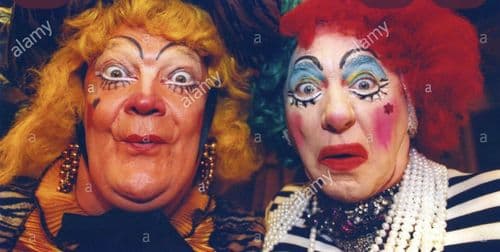
The Ugly Sisters: How Envy and Sabotage Operate in Narcissistic Families
In the traditional telling of Cinderella, the ugly sisters are often dismissed as jealous villains whose cruelty simply serves to highlight Cinderella’s goodness. Yet beneath the fairy-tale surface lies a deeper psychological story—one that speaks to envy, family scapegoating, and the painful dynamics often found within narcissistic family systems.
From a psychological perspective, Cinderella can be understood as the family scapegoat. She is assigned a lower status within the household regardless of her actual qualities. She is expected to serve others, carry burdens that are not hers, and accept treatment that would be considered unfair if directed at anyone else. Her role is not based on who she is, but on what the family needs her to be.
The ugly sisters represent another familiar dynamic: envy disguised as superiority.
What makes their behaviour significant is that Cinderella has done nothing to deserve their hostility. She does not compete with them, attack them, or seek to undermine them. Yet her presence alone becomes threatening. Her kindness, resilience, beauty, and quiet strength highlight qualities the sisters either lack or fear they lack within themselves.
Rather than develop those qualities, they attempt to destroy the person who possesses them.
This is often how envy operates in narcissistic family systems. Instead of celebrating another person’s strengths, envious family members experience those strengths as a personal threat. The success, happiness, confidence, or potential of one family member becomes intolerable because it challenges the family’s established hierarchy.
As a result, sabotage often follows.
The sisters do not merely dislike Cinderella; they actively try to prevent her from attending the ball. Symbolically, the ball represents opportunity, recognition, visibility, and transformation. It is the moment when Cinderella might finally be seen for who she truly is rather than the role her family assigned to her.
In many dysfunctional families, similar patterns emerge. A sibling may mock another’s ambitions, minimise achievements, spread gossip, withhold support, or create conflict at moments of success. The objective is often not personal advancement but maintaining control over someone else’s place within the family structure.
The unspoken message is clear:
“You are not allowed to become more than the role we have assigned to you.”
The ugly sisters also reveal an important truth about envy. Envy is rarely satisfied by another person’s failure. It is a state of perpetual comparison. No matter what Cinderella loses, the sisters remain unhappy because the source of their suffering is not Cinderella—it is their own insecurity.
This is why their “ugliness” is best understood as symbolic rather than physical. Their ugliness lies in resentment, entitlement, and obsession with comparison. While Cinderella grows through adversity, the sisters become trapped by bitterness. They spend so much energy watching her that they neglect their own development.
The glass slipper offers a powerful contrast. It can be viewed as a symbol of authenticity—the unique qualities, identity, and purpose that belong to an individual and cannot be copied or stolen. The sisters may compete with Cinderella and attempt to take her place, but they cannot become her. The slipper fits only the person it was meant for.
For those who have experienced family scapegoating, sibling envy, or narcissistic abuse, this symbolism carries an important lesson. Freedom does not come from finally earning the approval of those determined to misunderstand you. It does not come from winning a competition that was never fair to begin with.
Freedom comes from stepping outside the system altogether.
Cinderella’s victory is not that she defeats her sisters. It is that she refuses to remain confined by the identity they created for her. She is eventually recognised not because her family changes, but because she enters a world beyond their control.
The enduring power of the story lies in its recognition of a difficult truth: some people will try to diminish you, not because you are lacking, but because they are threatened by what you represent. The answer is not to become smaller so that others feel comfortable. The answer is to continue becoming who you are, regardless of who resents it.
In this reading, the ugly sisters are more than fairy-tale villains. They are symbols of how envy, insecurity, and sabotage can operate within families—and Cinderella is a reminder that another person’s resentment does not determine your worth, your identity, or your future.