
Divorced Muslims
social.group.members
Share your experiences, find support, and seek guidance. Connect, heal, and find strength in the company of those who understand our journey.
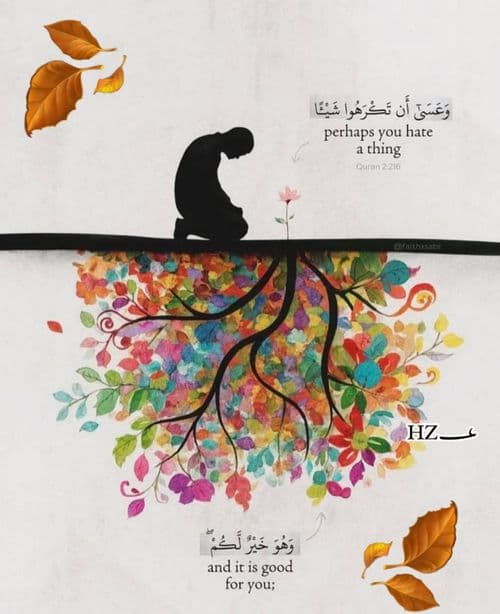
At its core, this wisdom reminds us of our limited human perspective and invites us to trust in a higher, divine plan.
Find Hidden Blessings.....
We often face disappointments,.losing a job, a relationship ending, or disrupted plans and perceive them as hardships. Later in life, we realize these "misfortunes" actually protected us or redirected us toward something far better.
Overide Illusory Desires..
We may intensely desire something, only to discover it brings us harm, stress, or takes us away from what truly matters.
Trust the Unseen....Because we can only see the present, our judgment is flawed. Trusting that the Creator sees the ultimate, long-term outcome brings immense peace of mind.
When you are struggling with a sudden change or a closed door, try shifting your perspective.
Pause and Reflect Instead of agonizing over what you didn't get, look at the situation objectively. Ask yourself if there is a lesson or a new path that this setback makes possible.
The harsh reality of the Muzz app is that many people join hoping to find someone who can help them build a better future or escape their current struggles. However, that's often unrealistic because most people on the app are facing their own challenges as well. At the same time, every person is being approached by multiple others with different intentions and expectations. That's the harsh reality behind the concept of the app.
If we want to make friends, let's put ourselves out to do things for other people -- things that require time, energy, unselfishness and thoughtfulness.
All of us, be we workers in a factory, clerks in an office or even a king upon his throne -- all of us like people who admire us
Sometimes we fear being ghosted, rejected, or hearing "the vibe didn't match," but honestly, being saved before marriage can be a blessing in disguise.
One of the biggest mistakes people make is getting attached to words instead of consistent actions. When we are lonely, hopeful, or eager to get married, it becomes easier to overlook red flags and accept less than we deserve. Unfortunately, some people know how to say all the right things without having the character to back them up.
Marriage is one of the biggest decisions of your life. It shouldn't be rushed, driven by excitement, or built on sweet words alone. A good connection develops slowly and consistently. Trust is earned over time through actions, not promises.
If someone leaves, ghosts, or decides you're not compatible, it may feel painful in the moment, but it is often far better than discovering incompatibility, dishonesty, or unhealthy behavior after marriage.
Take your time, keep your standards high, make lots of dua, and pay attention to actions more than words. The right person won't just talk about commitment—they'll consistently demonstrate it. ❤️
Signs of Hypocrisy (Munāfiq Traits)
- Words don’t match reality
Often lies, exaggerates, or changes stories depending on the situation.
Hadith: “When he speaks, he lies.” (Bukhari & Muslim)
- Breaks promises repeatedly
Makes commitments but doesn’t follow through without real excuse or accountability.
Hadith: “When he promises, he breaks it.” (Bukhari & Muslim)
- Cannot be trusted with responsibilities
Fails to protect trust, secrets, or obligations given to them.
Hadith: “When he is entrusted, he betrays.” (Bukhari & Muslim)
- Fair only when it suits them
In conflict, becomes unfair, aggressive, or manipulative.
Hadith: “When he quarrels, he behaves unjustly.” (Bukhari & Muslim)
- Acts good only for people to see
Focuses on appearance, reputation, or being praised rather than sincerity.
Qur’an 4:142 (about showing off in prayer)
- Inconsistent worship or values
Shows interest in faith or morals publicly but ignores them privately when convenient.
Qur’an 4:142
- Uses good words but harmful actions
Speaks about morality, kindness, or religion but behaves in ways that contradict it.
Qur’an 2:8–11 (hypocrites saying “we are reformers” while causing harm)
- Avoids responsibility for wrongdoing
Denying, deflecting, or blaming others instead of owning mistakes.
Qur’an 2:11–12 (claiming “we are only reformers”)
- Concerned more with image than truth
Protects reputation even when it means denying obvious reality.
- Repeats harmful patterns without change
Apologies may happen, but behaviour stays the same over time.
Islamic teachings describe hypocrisy as a gap between inner truth and outward behaviour. The key warning sign is not one mistake, but a repeated pattern of dishonesty, broken trust, and inconsistency without real change.
Narcissists and Repeated Disrespect When They Are Taken Back
The Cycle Often Described in These Relationships
In relationships involving strong narcissistic traits, a common pattern described is repeated cycles of disrespect followed by reconciliation. After conflict or emotional harm, there may be apologies, charm, or promises of change, which can lead to the relationship being restarted. However, without sustained change, the same behaviours often reappear.
Why the Behaviour Can Repeat After Reconciliation
When a narcissistic pattern is present, taking the person back can remove consequences that might otherwise reinforce boundaries. If accountability is not maintained over time, the person may revert to familiar relational behaviours—such as dismissing concerns, prioritising their own needs, or minimising the impact of their actions.
How Disrespect Can Gradually Resurface
After reconciliation, things may initially improve, sometimes significantly. Over time, however, earlier patterns can return: invalidation of feelings, lack of empathy in conflict, shifting blame, or emotional withdrawal. This return can feel confusing because it often happens gradually rather than immediately.
The “Idealise, Devalue, Reconnect” Cycle
In some descriptions of narcissistic dynamics, relationships can move through repeating phases: idealisation (intense connection or affection), devaluation (criticism, disregard, or emotional harm), and reconnection (apology or reconciliation). When someone is repeatedly taken back, this cycle can restart again and again.
Why Change Often Does Not Stick
Sustained change requires self-reflection, accountability, and consistent effort over time. In narcissistic patterns, there may be difficulty maintaining these changes due to defensiveness, low tolerance for shame or criticism, or a focus on self-protection over relational repair. As a result, short-term improvements may not translate into long-term behavioural change.
Emotional Effects of Repeated Cycles
For the person experiencing the behaviour, repeated cycles can lead to emotional fatigue, confusion, and reduced trust in their own perceptions. The inconsistency between reconciliation and later behaviour can make it harder to predict or interpret the relationship accurately over time.
Role of Boundaries in Preventing Repetition
In these dynamics, boundaries are often what determine whether the cycle continues or changes. Without consistent boundaries or consequences, reconciliation alone may not prevent repetition of earlier behaviours. Clear limits can interrupt the pattern by introducing accountability.
Overall Pattern Summary
From this perspective, the issue is not simply reconciliation itself, but what happens after it. In narcissistic relational patterns, repeated taking back without sustained behavioural change can allow cycles of disrespect to continue, reinforcing the same dynamic over time rather than resolving it.