Book Club
social.group.members
📚 Calling all Bookworms 🐛✨ we devour books faster than pizza (almost), so share the best thing you’ve read recently!
If people here ask me what to do during knowing someone by this app. I will definitely suggest y’all to do istikharah. Yes, istikharah is asking Allah’s guidance. We don’t know if this person is good for us or not. By committing istikharah, we will get the answer by time.
Be the pages of the book that people fold corners on..
The ones they re-read when the world gets quiet,
The ones that stay with them long after the chapter ends..✨
I feel bad for the people who will never know the feeling of finishing a book and the heart wrenching ache when closing it as if you are leaving your home forever and never going to meet the characters the same way you did the first time, crying so hard at a scene that you have to pause for a few minutes and scream out loud and the pieces of yourself that you left in between those pages that would never be the same again.
Now I'm ready to know you my future life wife 😍 and I'd not care you from I'll walk thousand miles to see if it's true love intentions
My book, “Thinking Traps” is available on Amazon: https://www.amazon.co.uk/dp/B0DK17N31T
In Thinking Traps, uncover the powerful connection between two often overlooked yet deeply intertwined forces that shape our everyday lives: cognitive distortions and logical fallacies. While psychologists examine cognitive distortions as the mental patterns that cloud our emotions and perceptions, philosophers dissect logical fallacies as the errors that undermine our reasoning and arguments. In this unique and insightful book, these two realms of flawed thinking come together in a groundbreaking exploration, showing how our emotional biases can fuel faulty reasoning, and vice versa.
Through dedicated sections, Thinking Traps delves deep into both cognitive distortions and logical fallacies, illustrating how these mental traps influence everything from personal decisions to public debates. The first section focuses on common cognitive distortions—such as all-or-nothing thinking, emotional reasoning, and catastrophizing—demonstrating how they skew our perception of reality and affect our emotional well-being. The second section tackles logical fallacies like ad hominem, false dilemma, and slippery slope, revealing how these reasoning errors disrupt our ability to argue effectively and engage in rational discourse.
But what truly sets Thinking Traps apart is the third and final section, where the book bridges these two domains, showing how cognitive distortions can lead directly to logical fallacies. For instance, how jumping to conclusions can morph into hasty generalizations, and how emotional reasoning can undermine objective arguments, creating a cycle of flawed thinking that limits personal growth and distorts public discussions.
In a world filled with information overload and constant debate, Thinking Traps provides readers with essential tools to strengthen their critical thinking, improve mental well-being, and navigate daily life with more clarity and compassion. Whether you're a psychology student, philosophy enthusiast, or simply someone looking to understand the mechanics of human thought, this book offers practical guidance on recognizing and overcoming the thinking traps that keep us stuck.
Empower yourself to break free from these mental snares and embrace a more thoughtful, rational approach to life's challenges. Through awareness, reflection, and practical techniques, Thinking Traps helps you develop a mindset that fosters healthier emotions, stronger relationships, and more reasoned decision-making.
Welcome to Thinking Traps—your guide to reclaiming mental freedom and sharpening your critical thinking.
My book, “Cognitive Intervention” is available on Amazon : https://www.amazon.co.uk/dp/B0DBR76MTP
Cognitive Intervention is a transformative guide that blends the powerful principles of Rational Emotive Behavior Therapy (REBT) with the relatable, everyday experiences of John Smith. This book takes readers on an engaging journey through the life of John, a character whose struggles and triumphs will resonate deeply with anyone seeking personal growth and emotional well-being.
Through the lens of John's life, readers will explore the fundamental concepts of REBT, learning how irrational beliefs and negative thought patterns can shape our emotional responses and behaviors. As John navigates challenges in his personal and professional life, the book illustrates practical strategies for identifying and disputing these irrational beliefs, fostering a healthier, more rational mindset.
Each chapter delves into a different aspect of John's journey, from dealing with stress at work and managing relationship conflicts to overcoming self-doubt and achieving personal goals. The narrative is crafted to reflect the common obstacles and emotional hurdles that many people face, making John's story a mirror in which readers can see their own lives.
What sets Cognitive Intervention apart is its interactive approach. At the end of each chapter, readers will find useful exercises designed to reinforce the principles discussed and to facilitate their own cognitive transformation. These exercises are practical, easy to follow, and directly applicable to everyday life, ensuring that readers not only understand the concepts but also know how to implement them effectively.
By the end of the book, readers will have a comprehensive understanding of how to use REBT techniques to challenge and change their thought patterns, leading to a more fulfilling and emotionally balanced life. Cognitive Intervention is more than just a book; it is a practical toolkit for anyone committed to making positive changes and achieving lasting mental well-being.
Join John Smith on this enlightening journey and discover how cognitive intervention can be the key to unlocking your best self.
My book, “Adam and Iblees - The Choice” is available on Amazon: https://www.amazon.co.uk/dp/B0DV4HTZSY
At the core of our existence lies a timeless struggle—one between pride and humility, self-deception and self-awareness, stagnation and growth. Adam & Iblees - The Choice delves into this internal conflict through the stories of Adam and Iblees, offering profound lessons rooted in religion, philosophy, and psychology. This book invites readers to confront their own egos and embrace the transformative power of humility.
Through the contrasting choices of Adam and Iblees, we see two paths: Adam's humility and repentance leading to renewal, and Iblees' arrogance leading to ruin. Their stories are metaphors for the daily choices we all face—whether to acknowledge our faults and seek growth or to let pride stand in our way.
Religious teachings from Islam, Christianity, Judaism, Hinduism, and Buddhism affirm that human imperfection is inevitable, but redemption is always possible. The book explores how different faiths emphasize the importance of seeking forgiveness and striving for self-improvement.
Philosophical perspectives, drawing from thinkers like Socrates, Aristotle, and Kierkegaard, reveal that humility is not just a moral virtue but a crucial element of wisdom and ethical living. Socrates' admission of ignorance and Aristotle's "Golden Mean" provide insights into the balance required to lead a meaningful life.
Psychological concepts such as cognitive dissonance, emotional intelligence, and the growth mindset offer practical tools for overcoming pride and fostering personal development. Carol Dweck’s research highlights the importance of viewing challenges as opportunities to learn rather than threats to our self-worth.
Pride and humility also shape our relationships. Whether in friendships, marriages, or workplaces, pride can erode trust and connection. This book offers practical strategies to cultivate humility in our interactions—through active listening, sincere apologies, and empathy.
More than just an intellectual exploration, Adam & Iblees - The Choice is a call to action. Reflective exercises and practical advice encourage readers to embark on their own journey of self-discovery, inspired by Adam’s example of humility and resilience.
Ultimately, this book underscores that true success is not about avoiding mistakes but about learning from them. Whether pursuing spiritual peace, personal growth, or meaningful relationships, the choice between humility and pride is pivotal.
As you read, consider: Where has pride held you back? How has humility helped you grow? What steps can you take to become more self-aware? The lessons of Adam and Iblees resonate deeply in our lives today.
The choice is yours—will you walk the path of humility and growth, or remain bound by pride? Adam & Iblees - The Choice invites you to embark on a journey of transformation and self-discovery.
My book, “Why Are We Here?” is available on Amazon: https://www.amazon.co.uk/dp/B0DCK6W7TL
Why Are We Here? This profound and timeless question echoes through the corridors of human existence, transcending gender, race, and creed. It is a question that every human being, at some point in their life, confronts. This book ventures to propose common sense answers that resonate with the majority, irrespective of their religious or philosophical beliefs. Though religious texts are employed to elucidate certain points, the discourse remains inclusive, ensuring that even those without religious inclinations can find agreement with the arguments presented.
The central thesis of this book is both bold and enlightening: our creation is an ongoing process, and our presence on this earth is an integral part of that creative journey. To support this idea, a rich tapestry of philosophical, scientific, and religious arguments is woven, inviting the reader to analyze the issue from multiple viewpoints. As the reader delves deeper, they will learn to examine the various stances on "God"—whether atheistic, agnostic, or theistic—from a rational perspective. In doing so, they might discover that the apparent differences between these positions often stem from the rigid definitions of concepts such as "God," "Heaven," "Hell," "Predestination," and "Satan." Through the lens of reason, these concepts can be reinterpreted to accommodate a wide spectrum of beliefs.
From the Muslim perspective, this book holds particular significance as it offers a fresh illumination of the Qur’an’s teachings. In today's world, the concept of "religion"—and Islam in particular—is frequently perceived as being synonymous with rigid rules, legalistic governance, intolerance, and even terrorism. This perception has led both Muslims and non-Muslims to view Islam predominantly as a legalistic religion focused on political dominance. However, this narrow vision obscures the deeper, more philosophical teachings of the Qur’an, which address the fundamental questions of life.
This book aims to unveil this often-hidden dimension of Islam. It encourages readers to see the Qur’an not merely as a manual of ritualistic worship and political directives but as a profound guide that addresses the most essential questions: Why do we exist here? Why do we suffer? What is true success? In doing so, it seeks to shift the focus from the contentious and often violent aspects of religious expression to a more spiritual and rational understanding of Islam, one that appeals to reason and common sense.
In a world fraught with religious conflict and intolerance, the need for such a shift is urgent. By drawing upon the Qur’an, alongside other revered scriptures like the Bible and the Buddhist Dhammapada, this book aspires to unite people in their quest for answers to life's fundamental questions. It is a call to transcend the barriers of rigid definitions and divisive ideologies, fostering a shared journey towards understanding the essence of our existence.
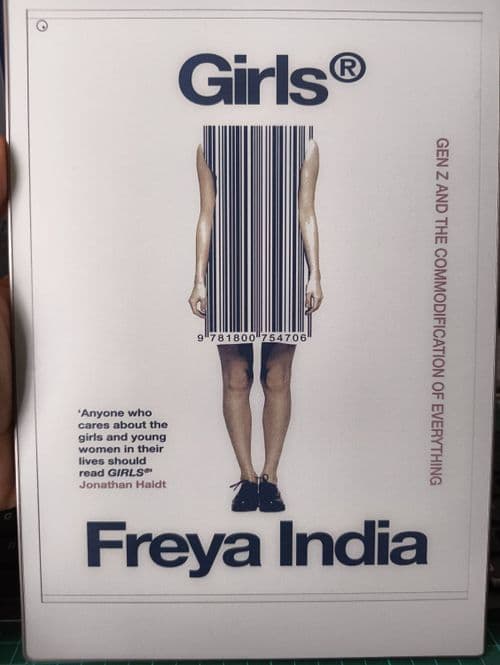
Since I recently read a few books about men’s struggles, I wanted to balance the scales and better understand what is happening with women. I came across GIRLS by Freya India after watching a Chris Williamson podcast, and found her argument convincing enough to read the book.
India explores the new pressures women face after being liberated from older ones. Her argument is that young women are now encouraged to see themselves as products in a marketplace rather than as people. The book examines the vast network of industries that profit from young women’s anxieties, and how these industries shape everything from how women look to how they feel, love, and relate to others.
India admits she is generalising from her own experience of girlhood. Many women couldn’t care less about beauty trends, manage their emotions without overanalysing themselves, and do not feel anxious about dating apps. However, India is speaking for those wrestling with the modern world: those who overthink, overanalyse, constantly compare themselves, and feel ashamed for struggling.
Her aim is to inspire more empathy and a little more grace. There is a tendency of the older generation to mock, trivialise or dismiss the distress of younger generations as ordinary adolescent concerns. But India argues that something more serious is happening.
# The problem with growing up online
Modern digital technology amplifies the age-old anxiety adolescents have always felt. Throughout history, young women have always worried about their appearance, emotions, social status, friendships, families, romantic relationships, identity, and futures. Since around 2010, social media, smartphones, dating apps, beauty filters, online therapy culture, and influencer marketing have intensified ordinary adolescent insecurities like never before.
This generation of girls is among the first to:
- -Find love by swiping,
- -Have their bodies ranked and reviewed on socials before adulthood,
- -Document adolescence for an online audience.
The problem, though, is more sinister than that. They are also exploited. There is nothing new about corporations profiting from women’s vulnerabilities, but now they have more immediate and intimate access than ever before. The scale and sophistication of this exploitation are unprecedented. A vast machinery of corporations and advertisers mines young women’s confidence, self-worth, and sense of belonging, only to sell it back to them for profit.
India’s critique is especially focused on social media. The incentive systems on these platforms drag everything towards extremes through a gradual ratcheting up of intensity. When you spend most of your time online, this extreme content no longer feels extreme; it becomes normal. The most egregious stories are often the ones most likely to go viral, so content creators competing for attention are encouraged to catastrophise and generalise.
## Beauty and self-commodification
Beauty is one of the clearest examples of this dynamic. Women have always worried about their appearance, but today they are doing so in a world of augmented-reality filters, TikTok beauty trends, cosmetic procedures, and surgically enhanced influencers.
They are not only comparing themselves to other people, but also to digitally altered faces and bodies. Over time, this leads to fragile confidence, where natural skin, ordinary features, and normal body proportions begin to feel inadequate.
## Mental health and self-diagnosis
India also critiques online therapeutic culture. She is not denying that mental health problems are real. Her concern is that many young women have spent their most impressionable years learning what is healthy, unhealthy, normal, or abnormal from recommendation algorithms and influencers designed to sell them a solution.
In this environment, self-care and self-love can become commercialised terms. Women are encouraged to constantly analyse themselves, label themselves, and interpret ordinary emotional struggles through diagnostic language:
- Personalities become pathologies.
- Feelings become symptoms
- Identity becomes a collection of conditions to explain, manage, and optimise.
India’s warning is that when mental health language is filtered through platforms and markets, distress becomes another opportunity for profit.
## Dating, relationships, and vulnerability
It is also normal for young women to worry about love, physical intimacy, commitment, and attraction. But today they have to navigate those anxieties in a world of dating apps, adult-oriented media, online relationship advice, and a culture where casual intimacy and self-commodification are sold as female empowerment.
Online relationship advice often lacks context and can turn ordinary relational difficulties into warning signs. What we used to call love, such as being affected by your partner’s feelings, putting their needs first, or depending on one another, is increasingly pathologised as codependency or anxious attachment. Now it seems like any strong feelings are a warning sign.
India is also critical of how commitment is increasingly treated as a burden. Divorce, independence, and detachment are not only seen as acceptable in some circumstances, but sometimes framed as aspirational forms of self-actualisation. The result is a culture where emotional investment feels risky, and people are encouraged to protect themselves rather than build lasting bonds.
# The paradoxical generation
India is not saying that the modern world is all bad. There is much to be grateful for. Many young people are materially safer, freer, and more comfortable than previous generations.
But she argues that modern life is psychologically demanding in new ways:
- We have better technologies, but nowhere to belong.
- We have more free time, but we waste it on our devices.
- We have constant online connections, but we feel isolated.
- There is no imminent threat to our lives, but there is little meaning to them either.
Millennials and Gen Z are constantly reminded of how lucky they are to have technology, opportunity, and the world at their fingertips. So when girls cannot make sense of their distress, they may assume something is wrong with them rather than with the world they are growing up in.
# What is the solution?
India does not offer a neat solution. Her deeper concern is that when traditional sources of authority, meaning, and belonging are weakened, the market steps in to fill the gap. If family, religion, community, and intergenerational wisdom are dismissed entirely, then platforms, influencers, brands, and advertisers become the new authorities. They start shaping what is normal, desirable, healthy, empowering, and worth pursuing.
# Personal reflection
Like the previous books I have read, I do not think these problems are exclusive to women. Young men are also affected by the same market logic, though it often manifests differently. A few months ago, I came across the term “lookmaxing”, where young men try to maximise their appearance to increase their value in the dating market, sometimes turning to exogenous hormones or extreme appearance-altering procedures. Men and women may differ ideologically, but behaviourally, they seem to respond to similar pressures.
For me, GIRLS is ultimately a critique of consumer culture. It shows how capitalism, recommendation algorithms, and influencer marketing can turn insecurity into a business model. The more anxious, lonely, unattractive, confused, or inadequate young people are made to feel, the more products, services, diagnoses, identities, and solutions can be sold back to them.
In conclusion, India asks us to look more carefully at what young women are being sold, and to consider whether what is presented as empowerment may just be another form of commodification.
If you read the book, I’d say the core argument is in the introduction and conclusion, while the main chapters provide examples and further context.